| Newsletter Academic Collaborative Centers January 2026 |
|
| Broad Prosperity at Tilburg University |
|
Keynote by Professor Stuart L. Hart
|
| On January 22, 2026, you can attend the keynote speech by Professor Stuart L. Hart, an internationally renowned thinker in the field of sustainable and bottom-of-the-pyramid innovation. He will demonstrate how businesses, governments, and societies can work together to build a sustainable and inclusive future. The number of places is limited, so register quickly. |
|
|
|
|
|
|
| What does Broad Prosperity mean, beyond figures and policy? |
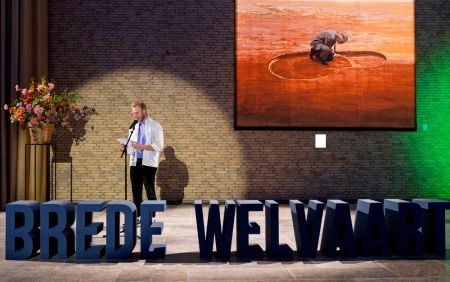
| Perhaps you were there during the Broad Prosperity Day in November 2025. Alongside the technical sessions, there was plenty of room for inspiration. This came, among others, from the campus poet of Tilburg University, who used a poem to show how broad prosperity is also about values, choices, and imagination. Curious? |
|
|
|
|
|
|
| Two new papers on governing for broad prosperity |
|
Position paper: World Class Industry, World Class Society!
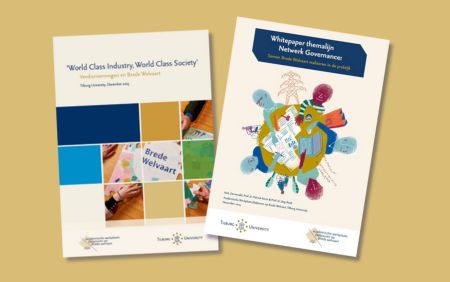
The Academic Collaborative Center for Governance and Management for Broad Prosperity at Tilburg University has published a position paper exploring how the Netherlands’ earning capacity should be viewed through the lens of broad prosperity. Drawing on recent reports by Mario Draghi and Peter Wennink, the paper argues that a World Class Industry is only possible in conjunction with a World Class Society.
|
|
|
|
|
|
|
| Whitepaper: Achieving broad prosperity in practice, together |
| Today’s major societal challenges, from climate change to rising healthcare costs. require collaboration between organizations that jointly create public value. But how does this work in practice? And what makes such collaboration effective? The center investigated these questions and compiled the insights in a whitepaper. |
|
|
|
|
|
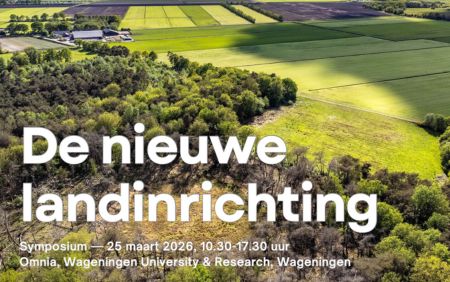
| Symposium: The New Spatial Planning |
| The center is co-organizer of the symposium series The New Spatial Planning at Wageningen University & Research. On March 25, the central question will be whether spatial zoning can help rebalance agriculture, nature, and other societal challenges. |
|
|
|
|
|
|
| How can numbers support person-centered communication? |
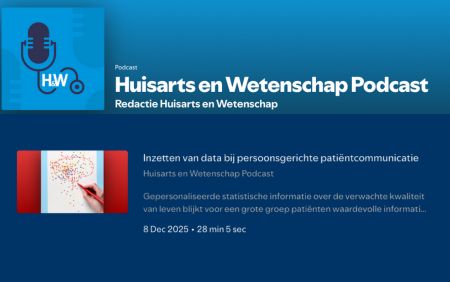
| How do you make data meaningful for general practitioners and patients? In a 30‑minute episode of the Huisarts & Wetenschap podcast, Saar Hommes discusses this question with GP Femke Veldman. She explains her research on communicating data for personalized communication in healthcare. |
|
|
|
|
|
| First insight session: learning from one another |
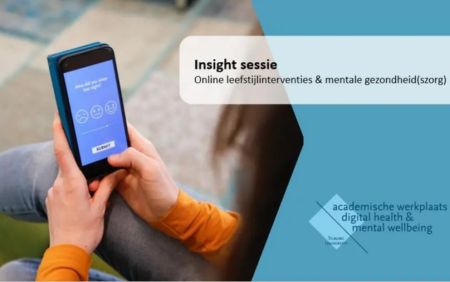
| During the first insight session of the Academic Collaborative Center for Digital Health & Mental Wellbeing, participants gained concrete insights into online lifestyle interventions supporting (mental) health. Presentations and panel discussions highlighted that digital tools only have impact when combined with personal guidance, clear goals, and attention to digital skills. |
|
|
|
|
|
| Technology: a source of stress or meaning at work? |
| Technology in the workplace can be stressful, but also motivating. New research by Tilburg University, Belgian institute IDEWE, and KU Leuven (including Tinne Vander Elst and Ruud Lathouwers) shows that digital overload and constant availability undermine meaning at work. At the same time, “challenging” technology can support learning and development. Digital skills and room to experiment make a crucial difference. |
|
|
|
|
|
Neuro-inclusive education as a step toward inclusion
|
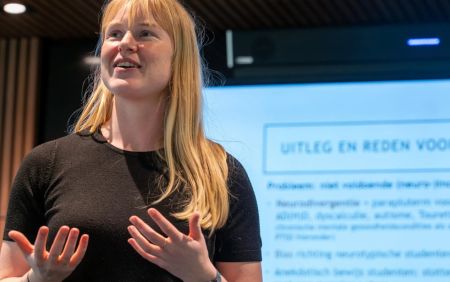
| Postdoctoral researcher Yvette Drissen shows how inclusion begins in the classroom. Together with Hanne Jacobs, she explores how neuro-inclusive education reduces inequality and improves education for everyone. Their experiences illustrate how small design choices can create space for diversity, development, and inclusion. |
|
|
|
|
|
| Participating in the energy transition with limited financial means |
| Why do subsidies often fail to reach the people who need them most? Research by economist Jan Stoop shows how policies with deadlines and complex procedures disproportionately exclude people with limited financial resources. An inclusive energy transition requires differently designed policy. |
|
|
|
|
|
| Sharpening choices around battery storage |
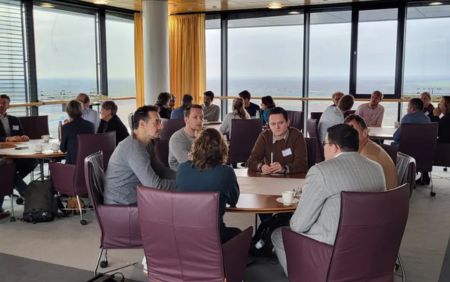
| During a partner session at the Province of North Brabant, researchers and practitioners explored the complex considerations surrounding (system) batteries. Concrete cases revealed opportunities and bottlenecks related to space, safety, ownership, and collaboration. The result: shared insights that guide policy, cooperation, and future research. |
|
|
|
|
|
Zero Poverty Lab also an Academic Collaborative Center
|
| The Zero Poverty Lab at Tilburg University makes an important contribution to advancing broad prosperity. The lab focuses on research into poverty and ways to structurally reduce it, in collaboration with researchers, partners, and donors. In 2026, the lab continues this mission, with the designation Academic Collaborative Center within the Program for Broad Prosperity at Tilburg University. |
|
|
|
|
|
| In Tilburg University Magazine |
|
| Digital healthcare: promise with a downside |
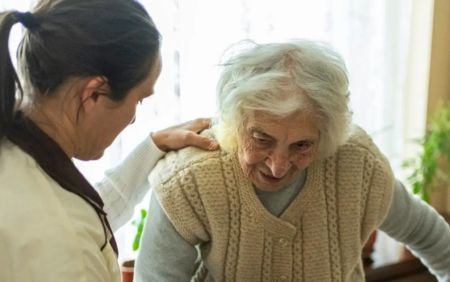
| Digital healthcare can offer great value, but not automatically for everyone. Researcher Joyce Bierbooms (Academic Collaborative Center for Digital Health & Mental Wellbeing) shows how technology can increase inequality. The solution? Not designing for people, but with them. This makes digital healthcare fairer, more accessible, and truly valuable for all. |
|
|
|
|
|
| Start small, think big |
| How do you create real societal impact with science? Professor Martijn Groenleer shows how the Academic Collaborative Center for Climate and Energy connects researchers and practitioners. By starting small and combining perspectives, knowledge grows into concrete solutions for the energy transition - learning together, doing together. |
|
|
|
|
|
| AI at work: opportunity or threat? |
| AI is changing work, but not as quickly or drastically as often assumed. According to Professor Anna Salomons (Academic Collaborative Center for an Inclusive Labor Market), AI often complements human labor. With good policy, education, and employers, AI can contribute to a fair labor market where talent continues to develop. |
|
|
|
|
|
|
- Broad regional consortium in Hart van Brabant joins forces for the logistics of the future. Read more (in Dutch).
- Digital blood sampling moves closer: patient problems detected earlier. Read more.
- Close the energy gap with broad prosperity as a compass for an inclusive energy transition. Read more (in Dutch).
- The promised AI revolution will be delayed by reality for a while longer. Read more (in Dutch).
|
|
|